
When a business experiences a cyber incident, the cause is often surprisingly simple. An email account has been compromised, a password has been reused across multiple systems, or someone has clicked a convincing phishing link.
Once an attacker gains access to a business email or cloud platform, the situation can escalate quickly. They may impersonate staff, change payment details, send fraudulent invoices, or access sensitive information. This is exactly why Multi-Factor Authentication (MFA) has become one of the most important security protections a business can implement.
What Is Multi-Factor Authentication (MFA)?
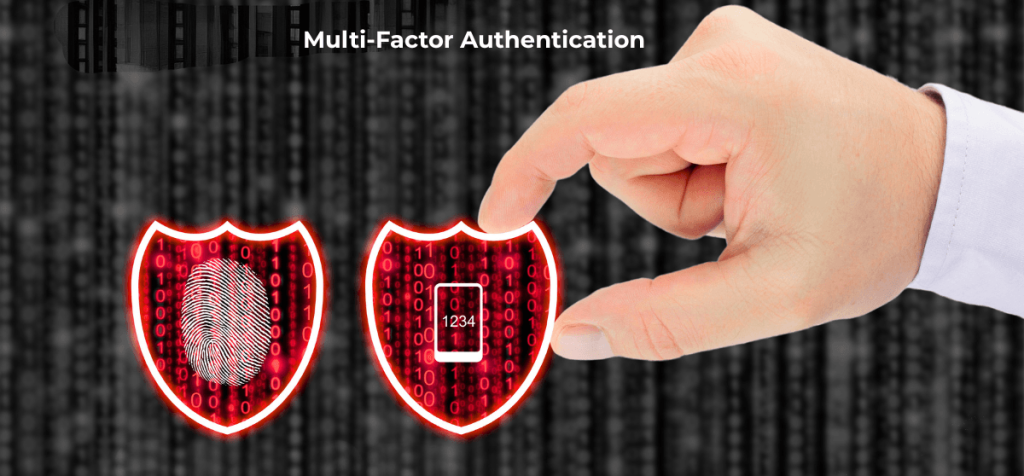
In simple terms, Multi-Factor Authentication means a password alone is not enough to access an account. After entering a password, the user is asked to confirm their identity through an additional verification step.
That confirmation usually appears in one of several ways:
• A push notification sent to a smartphone
• A code generated by an authenticator application
• A biometric check such as a fingerprint or facial recognition
It only takes a few seconds, but it adds an important layer of protection. Even if someone steals your password, they still can’t access your account.
Why Passwords Alone Don’t Protect Your Business
Most businesses still rely heavily on passwords to protect their systems. The problem is that passwords are inherently weak security controls. They are often reused across multiple services, guessed through automated attacks, exposed in large data breaches, or captured through phishing emails.
When a password protects important systems such as Microsoft 365, Xero or MYOB, CRM platforms, cloud storage, or remote desktop access, a single compromised login can quickly become a serious issue.
Multi-Factor Authentication stops that chain reaction.
Why This Matters for Businesses
We often hear business owners say, “We are probably too small to be targeted.”
Unfortunately, that is not how attackers think. Small and medium businesses are frequently targeted because criminals assume that security controls are lighter. At the same time, many SMBs rely heavily on cloud platforms and online systems to keep daily operations running.
When a single account is compromised, the impact can spread further than many businesses expect. It can affect supplier payments, client communication, payroll systems, sensitive data, and overall business operations.
Multi-Factor Authentication significantly reduces this exposure by making it far more difficult for attackers to gain access to accounts in the first place.
What Does MFA Look Like in Practice?
When we implement Multi-Factor Authentication for businesses, we keep it simple.
Typically, when a user logs in to email or a cloud system, they receive a notification on their phone asking them to approve the sign-in. They tap “Approve” and continue working. The process is designed to be straightforward for employees while quietly adding a strong layer of protection in the background. In other words, it strengthens security without disrupting the way people work.
Will MFA Frustrate Staff?
This is one of the most common concerns businesses raise when considering MFA, and it is a reasonable question. No organisation wants to introduce security measures that slow down their team.
In reality, the approval step usually takes only a few seconds. Most employees adapt quickly, and within a short period it becomes part of their normal routine.
The small inconvenience of confirming a login is minor when compared with the potential impact of a compromised email account or a fraudulent payment. Once teams understand that MFA helps protect payroll, supplier payments, and client data, resistance usually fades.
What About Cyber Insurance?
Cyber insurance is another reason why Multi-Factor Authentication has become increasingly important for businesses.
Many Australian cyber insurance providers now expect MFA to be enabled on key systems, particularly business email accounts, administrator accounts, and remote access platforms. Without MFA in place, organisations may face higher premiums, coverage exclusions, or difficulties when making a claim following a cyber incident.
For this reason, MFA is no longer viewed simply as a best practice. For many businesses, it is becoming an expected requirement.
How We Recommend Rolling Out MFA
When we work with businesses across Adelaide, we recommend a straightforward approach:
- Start with email and administrator accounts
- Test with a small group
- Roll out across the organisation
- Make MFA mandatory
Optional security always leaves gaps.
With proper planning and communication, most small and medium businesses can implement Multi-Factor Authentication smoothly and with minimal disruption.
The Bottom Line for Businesses
If your business is still relying on passwords alone, it is carrying unnecessary risk. Passwords on their own are no longer enough to protect modern business systems.
Multi-Factor Authentication is one of the simplest and most cost-effective ways to strengthen cyber security. By adding an extra layer of verification, it helps protect key systems such as business email, financial platforms, cloud services, and remote access tools.
More importantly, it helps safeguard the day-to-day operations and reputation of your business by significantly reducing the likelihood of account compromise.
Let’s Make Sure Your Business Is Properly Protected
If you are unsure whether Multi-Factor Authentication is correctly configured, or whether it is enabled everywhere it should be, it is worth reviewing.
At Rachis Technology, we help businesses strengthen their cyber security in a practical, manageable way.
If you would like to discuss your current setup, we are happy to have that conversation.
Because in most cases, breaches do not begin with sophisticated hacking. They begin with a password.
🔎 Frequently Asked Questions About Multi-Factor Authentication
Does MFA stop phishing attacks?
MFA significantly reduces the risk of phishing-based account compromise. Even if a password is stolen, the attacker would still need access to the second authentication factor.
What is the difference between MFA and 2FA?
Two-factor authentication (2FA) is a type of MFA that uses exactly two factors. MFA can involve two or more authentication factors.
Should small businesses in Adelaide use MFA?
Yes. Small and medium businesses in Adelaide are frequently targeted by cyber criminals. MFA is one of the most effective and affordable ways to reduce cyber risk.
For further insights, we invite you to explore our related blog posts on cybersecurity for SMBs:
• How to Keep AI Safe in Your Business: Five Practical Rules
• Building a Cyber Safe Culture: Practical Steps for Small and Medium Businesses